Quantcast

by Ralph Nichols

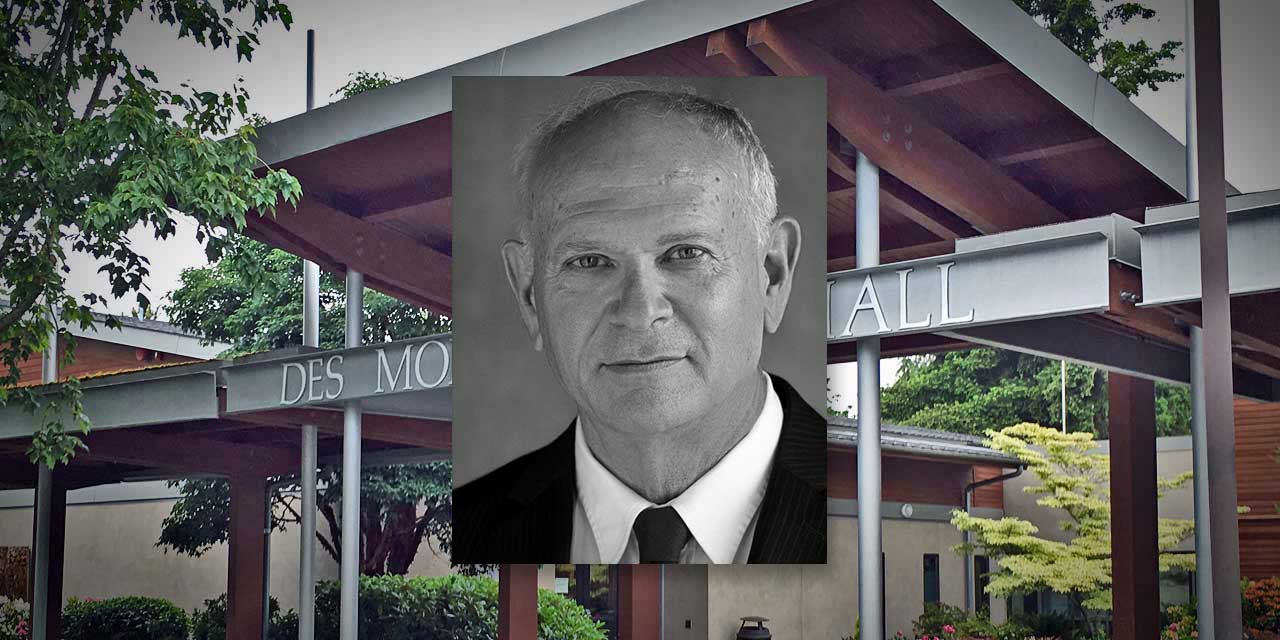
In the epilogue to a contentious period in Des Moines politics, city council members agreed on March 11 to pay former Councilman Gary Petersen $58,000 to settle his long-standing claim against the city.

The settlement compensates Petersen for legal fees incurred in his successful defense against a conflict-of-interest allegation involving his business – Pete’s Towing, the company’s contract with the city for towing services, and his concurrent position on the council.

After more than years of litigation, the Washington Supreme Court held in 2006 that Petersen had no conflict of interest in owning Pete’s Towing while serving on the city council.


“I am glad the courts have finally vindicated me,” he told me following the Supreme Court decision. This “completely [discredits] the attacks on my honor and integrity.”

But his legal expenses from that case remained an unresolved issue until last week, when six council members voted to approve the settlement. Councilman Dave Kaplan, who was defeated by Petersen in the 2001 city election, voted “no.”

Shortly before Petersen’s first council meeting in 2002, then-City Manager Bob Olander and then-City Attorney Gary McLean told him that, as a councilman, he would have a conflict of interest as owner of Pete’s Towing.

Pete’s Towing provides towing and impound services for the Des Moines Police Department and other city agencies, which it has done for almost 50 years.

Then, not long after Petersen took office, a group of local citizens publicly demanded that he relinquish the Pete’s Towing contract with the city, or divest himself of any interest in the company, or that he resign from the council.

When Petersen declined to do any of these things, the citizens’ group filed a lawsuit seeking his removal from the city council.

At trial, King County Superior Court Judge Laura Gene Middaugh ruled against Petersen, finding him in violation of state conflict-of-interest laws governing local officials.

But instead of taking any action against him, Middaugh declared that both state law and case law were vague as they related to Petersen’s case. She encouraged him to appeal her decision.

Earlier in 2006, the Court of Appeals unanimously reversed Middaugh’s ruling and dismissed the case against Petersen.

The Supreme Court subsequently issued a mandate stating that it agreed with the findings of the appellate court.

“Gary’s willingness to persevere on behalf of himself and other business owners throughout Washington has resulted in significant and important new case law,” Scott Missall, Petersen’s attorney, said in a statement to me after the Supreme Court action.

“The court’s decision upholds the intent of [state law] to encourage business owners to run for elected office. It’s been a hard-fought battle, but worth it because justice prevailed in this case.”

A "Class C" Pete's Towing truck.

Commenting on the unanimous ruling, Petersen said at the time, “The court has once again recognized how hard I have worked to conduct myself honestly in everything that I have done for this city.

“The will of the voters who elected me has again been upheld. This decision underscores the fact that this lawsuit was nothing more than a political attempt to discredit my honor and integrity.”

In the continuing saga of STITA vs the Port of Seattle, on Monday (Feb. 22nd), the Washington state Court of Appeals ruled in favor of the cab company by granting a temporary injunction against the Port of Seattle’s planned contract with Yellow Cab/Puget Sound Dispatch.

This means the Port cannot sign the planned contract “until further order of the Court” (click here to download/read the order as a PDF file), which could happen in April.

STITA’s request to expedite the appeal was granted by Commissioner Mary Neel. The Commissioner’s order states that this case will be heard by a three-judge panel “toward the end of the April 2010 term,” meaning that this ongoing SeaTac soap opera is far from over.

Members of STITA, who filed the original lawsuit against the Port of Seattle on Jan. 29, were obviously pleased with the decision.

“We are thrilled that the court stopped the Port from proceeding with an illegal contract,” said Jesse Buttar, a STITA member and spokesperson. “We’ve only ever asked for a fair process and a legal contract and now we hope the Port has finally listened and will re-do its flawed bidding process.”

Here’s more info from STITA’s press release, issued late Monday afternoon:

STITA, a non-profit co-op with one of the greenest cab fleet in the country, was created in 1989 by the Port of Seattle to exclusively serve the airport and provide reliable service to airport users. Now, after an unfair proposal process, STITA and its approximately 450 members and drivers will essentially be put out of business. They have the airport contract through August 2010.

STITA’s lawsuit claims that the Port’s bidding process violated state law by requiring bidders to commit to pay an unfair concession fee of at least 10 percent of their airport-based revenues to the Port. This revenue system violates the Airports Act, which says airport concession fees must be based upon the actual cost of operations and be reasonable and uniform. Previously, the Port had charged a per-trip fee to taxis based on the airport’s actual cost of services provided to the cabbies.

Additionally, the lawsuit contends that the Port’s new concession fees violate the King County Code and takes away from the King County Council’s authority to set “just and reasonable” taxi meter rates.

Despite protests from STITA to the Port about these glaring problems with the process and the proposed contract, the Port has so far declined to re-do its flawed contract bid.

A second lawsuit against the Port and Yellow Cab by Farwest Taxi was filed on Feb. 12.

Read our previous coverage of this ongoing legal battle here.

As the owner of Shuttle Express, a provider of passenger service at Sea-Tac International Airport, I have been following the Port of Seattle’s recent decision to replace STITA (Sea-Tac International Taxi Association) with Yellow Cab. How could the Port make such a poor decision and why? Even though I compete with the taxis, I feel the need to speak up. When there is such an injustice to the traveling public, questions need to be asked.

Working at Sea-Tac for 35 years, I have firsthand knowledge of airport operations and STITA Taxi. Knowing STITA’s reputation, I thought they would surely be chosen for the new contract for the taxi concession. I was astonished to hear the Port’s decision. The structure of the RFP caused a bidding war, and the Port plans to award the contract to the highest bidder, Yellow Cab. How could they base their decision purely on money and not reputation and quality of service?

Shuttle Express and STITA operate within a few feet of each other so I know their operations and service level. STITA taxi owners maintain their vehicles and have invested in a green fleet, all while making a living wage. And, STITA provides good service, much better than any other taxi service in Seattle.

As a competitor, it would be to my advantage to say nothing and compete against a lesser provider. But I can’t watch this play out without saying something about the Port’s injustice to STITA, and more importantly to you, the traveling public. I have no issue with the Port opening the concession to competitive bid, but its selection based on who will pay the most money rather than service and safety is wrong.

Jim Sherrell is the Owner of Shuttle Express.

More money for the Port may sound good, but in reality the over-inflated fees that Yellow agreed to pay the Port are way off base. There is no way Yellow can use the minuscule taxi fees to fund reservations, dispatch, accounting, marketing, safe vehicles, insurance, advertising AND also pay the Port an exorbitant fee to use the taxi curb. What expenses will the Yellow taxi drivers have to cut to still be able to put bread on the table? Will you feel safe when you climb into that taxi knowing they cannot meet their financial obligations and still make a living?

So why would the Port prioritize getting more money above safety, service and other important factors? What seems obvious is the Port wants more money. Who is eventually going to pay the Port more money? Sure, first it will be the poor taxi drivers. Next, the taxi drivers will ask regulators to allow increased fees. In the end, YOU, the traveling public will be paying the difference with higher taxi fares.

Now ask yourself, is the Port operating in the interest of the traveling public, or is it merely trying to squeeze more money from taxi drivers and you, the passengers?

Will the publicly elected Port of Seattle Commissioners recognize this flawed RFP bid for what it is and correct this radical mistake? My experience during the last thirty-plus years tells me that when the Port Commissioners know the facts and hear from their voters, they will make the correct decision to award the RFP fairly, based on service and safety for the traveling public rather than strictly money from fees.

It’s up to you, the traveling public, to let the Commissioners know your feelings on the issue to have it corrected: www.portseattle.org.

- Jim Sherrell
Owner, Shuttle Express

(Jim Sherrell is the owner of Shuttle Express, serving the Seattle region since 1979)

[EDITOR'S NOTE: Have something you'd like to say? Then email us your "Letter to the Editor" by clicking here. Be sure to include your real name and a way to contact you, and, pending our review, we'll most likely post it. Otherwise, feel free to leave a Comment below...]

On Wednesday (Feb. 27th), STITA and Farwest taxi companies sent letters to Washington State Auditor Brian Sonntag and Attorney General Rob McKenna, urging an investigation into the Port of Seattle.

This follows a recent, fast-paced rash of two lawsuits filed against the Port for its alleged mishandling of switching cab vendors over from STITA to Yellow Cab (read our previous coverage here).

The letter to the State Auditor asks him to investigate the Port’s handing of the entire on-demand taxicab RFP (Request For Proposal) process, which resulted in the two recent lawsuits.

The letter to Attorney General McKenna requests not only for an investigation of the Port, but also of lobbyist Chris Van Dyk, who is accused of collusion in the RFP process.

“It’s time for the auditor and the attorney general to step in,” said STITA spokesperson Jesse Buttar in a statement. “We hope they will take a careful look at the allegations against the Port.”

We got in touch with Perry Cooper, Media Officer for the Port, who said:

“Understand we have just received this and will review our records again…but we are still emphasizing that we are confident the RFP and bidding process was fair, open and transparent.

We have reviewed our approach continually throughout a thoughtful and thorough RFP and bidding process.

We are aware of no facts that would support allegations of collusion.

At no time during the process did anyone file an official complaint.

We were not aware of these allegations until the suit was filed.”

Both letters are enclosed below, and are available also for download here (both as PDF files):

The Port of Seattle is apparently being sued by a second taxi company – this time by Rainier Dispatch (aka Farwest Taxi) for ignoring collusion.

This is the latest twist in an ongoing legal war against the embattled Port of Seattle, and Rainier/Farwest is now the second taxi company to claim the Port’s process for selecting a new on-demand airport taxi contract is illegal (as we’ve covered previously, the first was STITA).

According to a press release we received Tuesday, Feb. 16th:

Farwest Taxi filed a lawsuit last Friday (Feb. 12th) in King County Superior Court against the Port of Seattle and Yellow Cab, its former partner in a joint bid for the airport contract. The lawsuit claims the Port’s proposal process was illegal. The lawsuit says lobbyist Chris Van Dyk drafted the bid for Yellow Cab, the winning bidder for the on-demand airport contract. Then he turned around and used that insider information to draft a less competitive proposal by the No. 2 bidder, a joint venture between Yellow, Farwest and Orange Cab.

“The Port of Seattle and Yellow Cab should be ashamed of this whole process,” said Gurcharan Dhaliwal, president of Rainier Dispatch. “Yellow Cab and Chris Van Dyk took our bid information and used it to make sure they came out on top, and the Port looked the other way.”

According to the lawsuit, Van Dyk knew trade secrets of the two other bidders in the joint venture, and used that proprietary intellectual property to ensure Yellow Cab submitted the top bid. In addition, in its legal filing, Farwest says it explicitly told Yellow representatives that it did not want anyone who drafted the joint venture proposal to also draft a proposal for any of the three individual members. They said they were assured that would be the case.

The Port’s own RFP states: “One or all responses will be rejected if there is reason for believing that collusion exists among Proposers, and no participant in such collusion will be considered in future proposals for concessions at the Airport.” [RFP, 13.4.1, p. 6]

This latest lawsuit follows on the heels of a well-publicized lawsuit filed by the Seattle-Tacoma International Taxi Association (STITA) on Jan. 29. STITA, which has the exclusive taxicab contract at Sea-Tac Airport through August 2010.

Like STITA’s lawsuit, Farwest Taxi’s lawsuit requests a court order barring the Port of Seattle from officially signing a contract with Yellow Cab. It also seeks an order disqualifying Yellow Cab from future re-bids of the airport contract.

STITA members were encouraged that another taxi company – even one of their competitors – saw the same foul play and are now suing the Port and Yellow Cab.

“Here is yet another reason for the Port to hold off on signing the illegal contract with Yellow Cab,” said Jesse Buttar, a spokesperson for STITA. “We hope the Port takes the opportunity to go back and review this whole process. This illegal process directly affects the 450 families who make up STITA. We just want a fair shot at the airport contract.”

A copy of this lawsuit can be downloaded here (as a PDF file).

In a fast-paced legal tennis match, after briefly having its restraining order denied, a State Court of Appeals Commissioner issued a stay late Monday in STITA Cab’s lawsuit against the Port of Seattle.

This means that, pending any other legal maneuvering, the Port will not be able to sign a contract with Yellow Cab.

Earlier Monday, King County Superior Court Judge Steven Gonzalez denied a restraining order filed by STITA to block the Port from signing the contract with Yellow Cab.

The contract for on-demand taxi service at Sea-Tac airport won’t be awarded until the court determines if the Port acted illegally. Judge Gonzalez heard STITA’s case Feb. 4th, and issued his decision Monday afternoon.

After Gonzalez’ initial ruling, STITA immediately took the case to the State Court of Appeals, which agreed to issue a stay – meaning the Port cannot sign with Yellow Cab until the legal issues are resolved.

The commissioner is expected to consider the merits of the case this week.

“We’re thrilled with this late-breaking win,” said Jesse Buttar, STITA cab owner. “We know we have a case. We just want a fair shot at the airport contract.”

On Jan. 29, STITA filed a complaint asking the court to halt the Port from signing a contract that violates state law. STITA seeks a fair and legal proposal process in which all bidders can compete on a level playing field.

In its lawsuit, STITA contends the Port’s bidding process violated the state Airports Act because the Port discontinued its prior practice of charging fees to taxicabs based on the airport’s actual cost of services provided to the cabbies. Instead, it required bidders to commit to pay an unfair concession fee of at least 10 percent of their airport-based revenues. This violates the Airports Act, which says airport concession fees must be based upon the Airport’s actual cost of operations and be reasonable and uniform.

STITA contends the Port’s bidding process caused a predatory bidding war among taxi companies which not only was illegal but will be financially devastating to the King County taxi industry.

STITA’s lawsuit also contends that the Port’s new concession fee violates the King County Code, which requires the King County Council to set the taxi meter rate at a level that is “just and reasonable.” The Port’s new concession fee cuts directly into the county’s taxi meter rate and prevents cab operators from receiving the gross receipts that they legally are entitled to receive.

The exclusive taxicab contract was held by STITA for 20 years in a no-bid deal.  After a harsh rebuke from the State Auditor over its contracting processes, the Port of Seattle issued a “Request for Proposal,” or RFP, for the first time last fall.

Yellow Cab won the award with a bid of $18.3 million, which is $8 million greater than the bid STITA submitted. Yellow Cab was named a defendant in the lawsuit, along with the Port of Seattle and other taxi associations.

In issuing his denial, Judge Gonzales noted that the RFP allowed for prospective bidders to file complaints, or injunctions, to any portion of the RFP document; Gonzales said, “The Plaintiff had the opportunity to file a complaint during the process, and they did not. They only complained when they did not win the bid.”

Stay tuned folks, because this legal match is far from over.

Monday afternoon (June 15th) a class-action lawsuit was filed on behalf of area residents who are upset with Sea-Tac Airport’s third runway against the Port of Seattle, claiming that noise and vibrations from aircraft are over and above what the Port has promised.

The class action lawsuit claims that as the runway was being developed and built, planning documents stated that it was to “only be used as an alternate runway to reduce delays in bad weather.”

Lawyers from the firm Pfau Cochrain Vertetis Kosnoff, PLLC contend that the port mislead residents to believe that the statement in the documents would be followed. However, since the runway’s opening, the plaintiffs claim that the port is now using the third runway for both departures and arrivals, bad weather or not, and at all hours of the day.

The third runway is currently being used more due to the re-construction of the first runway, which is supposed to last through the summer. Lawyers say that a statement on the Port of Seattle’s website claims that the FAA, which maintains control over all runways, will not restrict the use of the third runway.

The lawsuit is seeking damages for lowered property values and also to prohibit airplanes from using the third runway on weekends and between 10pm and 9am on weeknights.

The suit also intends to restrict planes from flying lower than 1,500 feet above the plaintiffs’ homes and only allow no more than one plane to fly over their neighborhoods per hour.

Apr ’09
19
2:30 pm

Residents in the path of Sea-Tac Airport’s third runway, negatively affected by increased noise and toxic fumes, are meeting with attorneys on Sunday, April 19th to prepare a lawsuit against the Port of Seattle.

The meeting will be held at 2:30pm, Sunday at the SeaTac Community Center, located at 13735 24th Ave. South in SeaTac. Area homeowners are invited. Trial attorneys Michael Pfau and Darrell Cochran, known for a string of successful, high-profile verdicts and settlements, are partnering with Seattle personal-injury attorney Will Dixon.

Sunday’s meeting is a discussion of homeowners’ rights, and potential remedies available under the law. Concerned residents living near the third runway’s flight path first contacted and met with attorneys on Jan. 10th.

Sea-Tac Airport’s third runway went into use Nov. 20th, 2008. Originally, Port of Seattle officials stated in planning documents, such as the environmental impact statement, that the new $1 billion runway was needed to reduce delays during poor weather. But in recent public statements, port officials have said the third runway was always intended to be used at high-traffic times and 365 days a year.

Local homeowners believe the situation will only worsen as departing planes – not just incoming flights – use the new runway. Also, the port plans to shift more traffic to the third runway as it rebuilds the eastern runway.

There are at least two potential lawsuits that are likely to be filed by homeowners. The first, a class-action lawsuit, would focus on the legal principle of inverse condemnation. Basically, plaintiffs believe the fair-market value of their property has been diminished by government “takings” or damages – in this case, by the dramatic increase of planes flying the area for third runway take-offs and landings. Plaintiffs would seek to recover just compensation for damages based on measurably diminished property values.

The second case would be a nuisance or damages lawsuit representing individuals seeking compensation for personal injuries. Local homeowners say throughout the day, big commercial jets are flying over their homes, coating their lawns with jet fuel particles and leaving a wake of toxic fumes.

Michael Pfau and Darrell Cochran are partners at the law firm of Pfau, Cochran, Vertetis, Kosnoff. Pfau and Cochran have years experience in personal injury and class-action lawsuits. In February, Pfau and Cochran secured a $14.2 million settlement from the Catholic Archdiocese of Seattle and a New York-based Catholic order on behalf of two dozen men, who were sexually abused at a Kent orphanage, the Briscoe Memorial School, during the 1950s and 1960s. In 2007, Cochran secured a $13.5 million settlement on behalf of thousands of Washington state students affected by the abrupt closing of the now-defunct Business Computer Training Institute (BCTI).

Earlier this year, Cochran and Pfau left their longtime law office of Gordon Thomas Honeywell to open their own firm, with offices in Seattle and Tacoma.

Will Dixon is a seasoned lawyer with more than a decade of legal experience representing clients in numerous multi-million dollar cases in Washington state and federal courts. Dixon focuses on personal injury, wrongful death, and commercial litigation. Dixon also worked in Gordon Thomas Honeywell’s trial group with Pfau and Cochran before opening his open firm. (Dixon Law Firm, http://www.dixon-law.com)

The meeting will be held in the Banquet Room of the SeaTac Community Center, which is located at 13735 24th Ave South:


View Larger Map