
Mayor Bob Sheckler will return to China late this summer – invitation in hand – for the 1st World Emerging Industries Summit 2010.
Sheckler, who said his invitation is “quite an honor,” hopes to interest investors there “in any type of development that would complement the city, either on the highway or downtown.
“This has to be a two-way street. We can’t just take and not give,” he added. “They are looking for good opportunities for investments in Des Moines that will give them a good return for their dollar. Their interest is in profitable investments.
“I look forward to the exchanges I will have with my hosts, and to reporting back to our city when I return.”
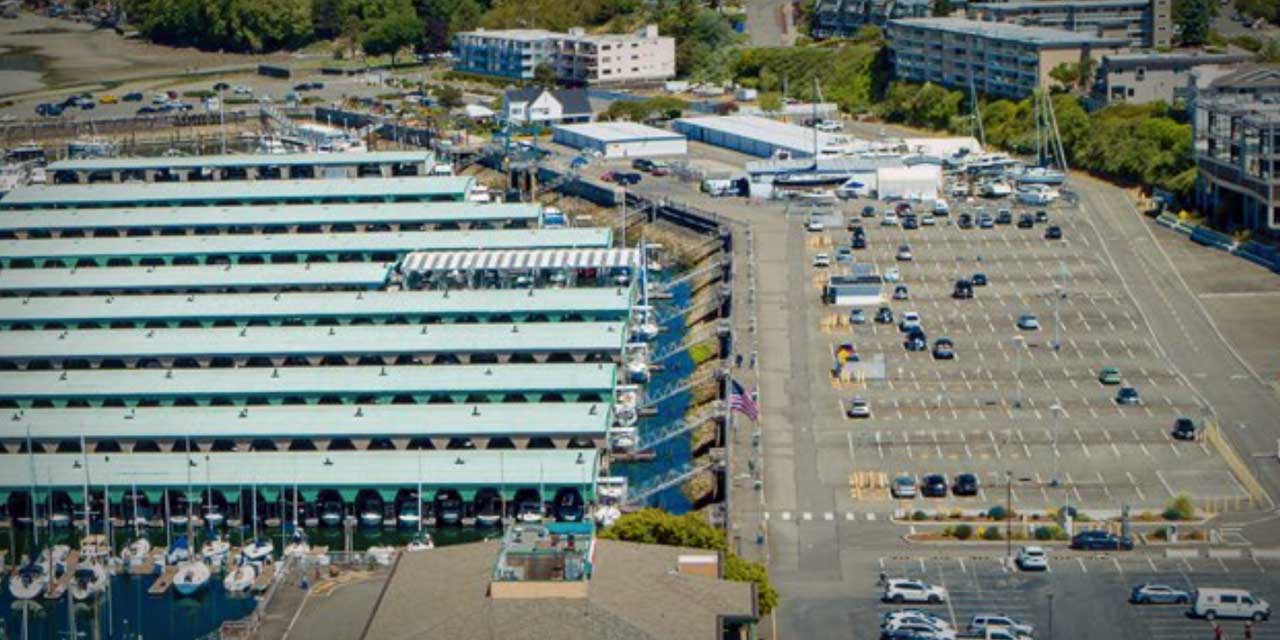
Sheckler said Chinese investors like the Des Moines area because they can’t get its views of Puget Sound anywhere else “without paying premium dollars for them. And the marina is a huge attraction to them.

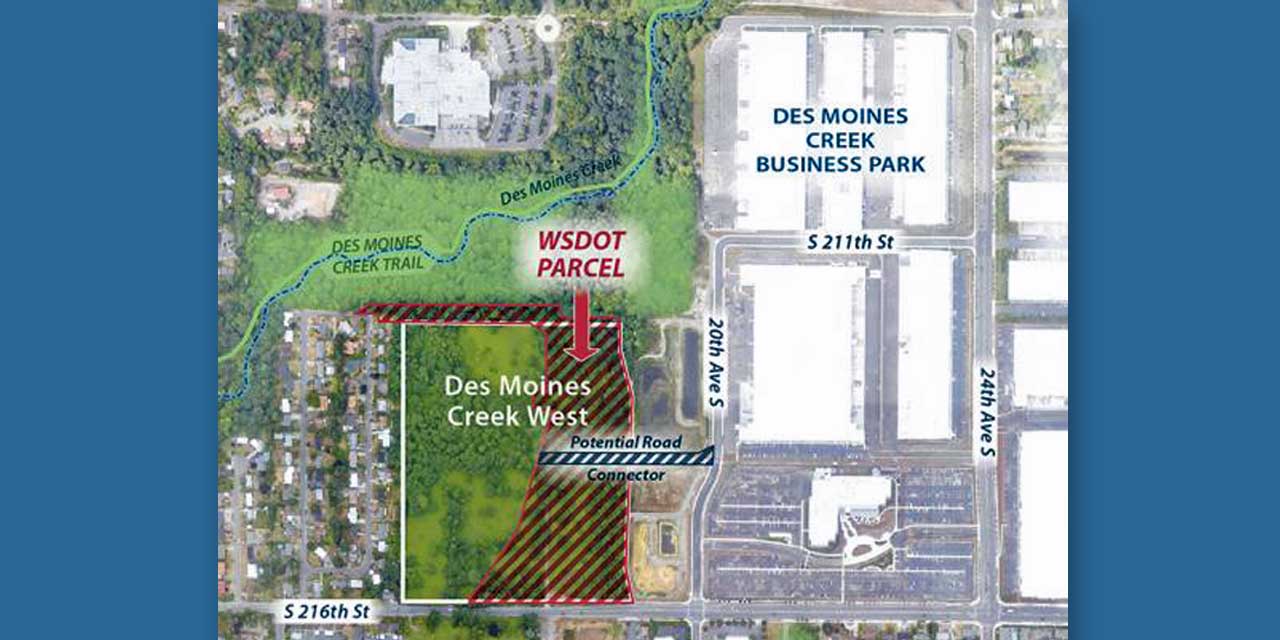
The proposed site north of 216th Street for the Des Moines Creek Business Park
“We’re squared away to bring in investments on Pacific Highway and to downtown now that the water issue is taken care of – and to Des Moines Creek Business Park,” he continued.
Sheckler was invited as the result of personal contacts he made with government leaders and business investors during his China trip last year.
He went there in November to build foundations for a sister-city relationship with Changle and an exchange program between Chinese community college students and Highline Community College.
But Sheckler came home with a lot more – an agreement for a multi-million-dollar hotel in Des Moines in addition to those relationships.
In addition to the hotel, with more than 300 rooms, this development – at the old state vehicle emissions testing site along Pacific Highway S. north of Kent-Des Moines Road – will feature a four- or five-star Chinese restaurant and, possibly, retail space.
“It will be a true Chinese restaurant,” Sheckler noted. “Not a Chinese-American restaurant.”
The project is currently in the planning and design stage. Groundbreaking for construction is expected sometime next spring, perhaps sooner.
Matt Chan of Normandy Park, who is planning the multi-phase Waterview Crossing development on Pacific Ridge, accompanied Sheckler on his China trip last year and introduced him to business investors there.
Sponsored by the Chinese government, the Aug. 31-Sept. 3 summit – “New Industrial Revolution & Green Economy” – will include business talks on investment and cooperation, information and technology exchanges, and promotion of international economic cooperation in emerging industries.

Mayor Bob Sheckler during his previous visit to China in 2009
International political leaders, ministers and elected representatives of federal, state and provincial, and local governments, leaders of Fortune 500 companies and other industry-leading companies, representatives from industry and related international organizations, and top economists have been invited.
The invitation came from Wang Rulin, governor, Jilin Province of China, Dominique de Villepin, global chairman of the Asia-Pacific CEO Association Worldwide, and Zheng Xiongwei, global executive chairman of the association.
“As Des Moines continues to reach across the Pacific to Chinese investors who are interested in the potential for them in Des Moines,” Sheckler declared, “I feel confident that the majority of city council members will embrace these opportunities for future economic development.”
A public hearing on an application for a planned unit development at Pacific Ridge took an unexpected twist and, later, an usual turn during the May 27 Des Moines City Council meeting.
Before the hearing began, Mayor Bob Sheckler recused himself to avoid any appearance of a conflict of interest in the matter – an application for phase one development of Waterview Crossing, an urban community planned for the Pacific Ridge neighborhood.
He said “one council member,” who was not identified publicly, “feels there may be such an appearance” because of his trip to China last November with Matt Chan, the principal developer behind Waterview Crossing.
Although City Attorney Pat Bosmans “found no actual conflict,” Sheckler noted that a public hearing “must have the appearance of fairness” and, to avoid a possibility that the council’s eventual decision could be overturned on appeal, left the dias.
Prior to stepping aside, Sheckler added, for the record, “those things I’ve been accused of never happened. And [Chan] is one of the most honest persons I’ve ever met. This developer, unlike some who do a project, take the money and leave town, is a respectable part of the community.”
He also observed this episode “shows the difference between the private and public sectors. “All my life I’ve been in the lending business for developers. [In the private sector] I would have been praised for all the efforts I’ve made to bring development about, rather than some of the criticism I recently received.”
With Mayor Pro Tem Dave Kaplan on vacation, the five remaining council members then selected Scott Thomasson to preside over the public hearing, which was halted before lawmakers began asking questions of city staff, the developers, and citizens who testified.
The brakes were applied by Thomasson in response to an earlier announcement by Bosmans, before a presentation of the project began, that she had been contacted by a council member who raised timely allegations regarding another council member’s impartiality in this hearing process.
A decision on the eligibility of the council member under challenge to participate is expected before June 10, when this public hearing will continue.
The identity of that council member was not made public, but there is speculation it is Dan Sherman – a vocal critic of the planned Waterview Crossing development who was not in a closed-door executive session of the council shortly before the meeting began.
One of the criteria for council members to participate in a public hearing is that they have not “demonstrated bias for or against” the proposal before them.

According to its website, one goal of Waterview Crossing is to "Realize the vision of the Pacific Ridge Neighborhood Improvement Plan to revitalize the neighborhood."
“I have not violated any of the rules,” Sherman said in response to the question asked by Thomasson, required by state law, which was posed to all seated council members. They were not under oath at the time they answered.
After Jason Sullivan, the city’s lead planner on the redevelopment project submitted for approval by SSI Pacific Place, LLC., summarized the primary land-use applications for the planned unit development and a requested parking code modification, several citizens expressed their concerns to council members.
While no one in the standing-room-only audience said they opposed the planned development – some even said they liked the way Waterview Crossing looks – they asked, “what will happen to us?”
Their worries center on how long they will have to move before development begins at the project site – located between Pacific Highway S. and 29th Ave. S., and S. 218th St. and S. 220th St. – and what relocation financial assistance will be available.
“We’ve been doing the best we can,” said Martin Gaza, speaking for his neighbors as well as himself. “It’s hard to find another place where we can be happy like that.”
Most of those in the audience indicated they live in four mobile home parks at this location, and that these mobile homes are older and can’t be moved.
Kim Nakamura, a partner in the Waterview Crossing development, told the citizens and council members that, given the pace of the project, “the minimum time for relocation will be 12 months, maybe more.”
A third-party consultant will be retained to help them relocation, and the developers “are committed” to meeting all requirements of state law.
Chan said as developers, they are “trying to do our best to improve the community over a long period of time.” That includes doing whatever the state mandates for relocation assistance.
Recalling that he came to the United States “as a 17-year-old kid” with no money “and worked my way up,” Chan added, “I have empathy for what you’re going through. I hope new doors open for you and your families. I assure you that things will be done for you in a proper manner in due course….
“I hope for you and your children things will be better,” he said. “You don’t have to stay in the same place forever.”

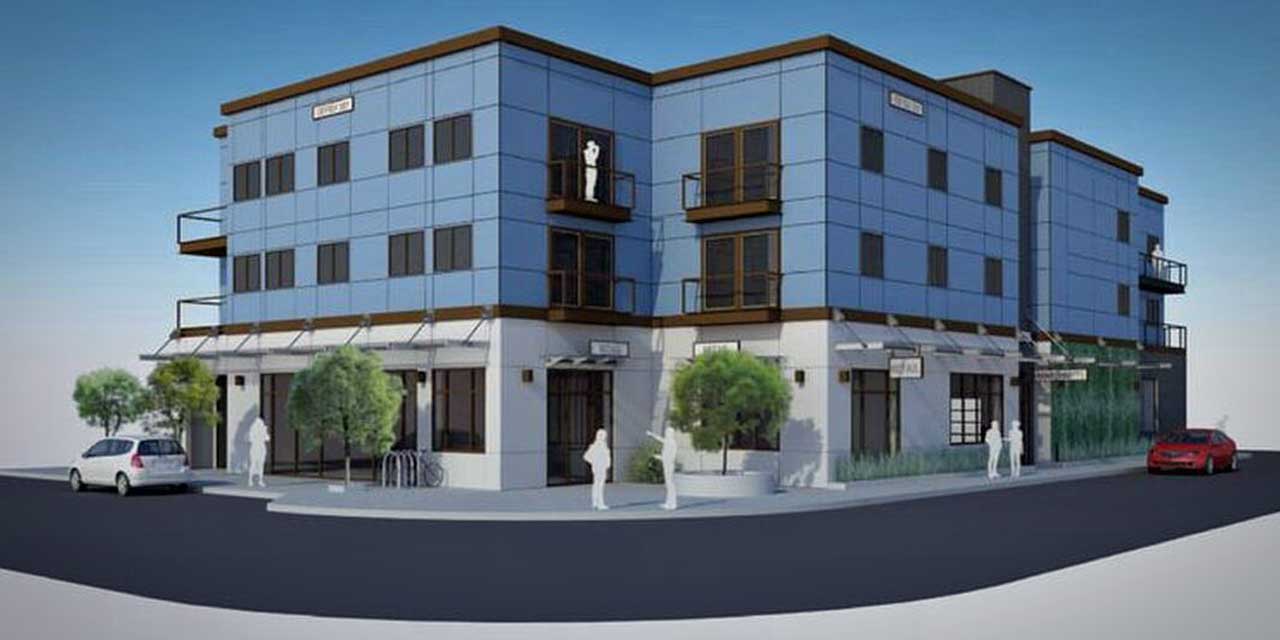
Drawing of a sample floorplan at Waterview.
City Manager Tony Piasecki noted that he has been talked with state Rep. Tina Orwall about relocation assistance and will call her to help with this process when the time comes.
Waterview Crossing is planned for development east of Pacific Highway S. between S. 216th St. and the Kent/Des Moines Highway as market conditions allow over an estimated 15-year period.
Alexander said the Pacific Ridge area, which has developed incrementally since the 1970s, has been identified by the city for redevelopment for the past 10 years. Plans call for higher-density urban development that takes advantage of views both east and west, with allowed building heights up to 200 feet and a greater reliance on mass transit and less on single-vehicle trips.
More information on this development is available at www.waterviewcrossing.com.
[EDITOR'S NOTE: The following is a Guest Editorial by Des Moines resident Greg Fox:]
by Greg Fox
With the recent public outcry that the city has no money and needs new development downtown, the question that many (including several councilmembers which is a bit puzzling) have asked is:
WHY IS THERE NO NEW DEVELOPMENT?
I believe there are a number of reasons why – let’s look at a few:
- LACK OF WATER:
Water District 54 supplies the water to the downtown area. After years of lying (as in not telling the truth) it was discovered that the water district has done no upgrades to its water system for some time. They have continually told the city and the fire department that water is not a problem (they still stand by that statement), but, in fact, there is a definite lack of water. The fire department has made the statement that if there were a major fire downtown, the fire department could possibly suck the water lines dry and collapse the system. Kind of scary if you really think about it. In order to build in the area, the buildings have to be a much higher fire rated construction (read that as more expensive-at least 50% more cost than if there were enough water). The city has known this for some time now (years). This was discussed by the council several times, but to no avail. It was put on the back burner before the last election and since there is no new development planned, it is not now an issue. - NO POWER:
Puget Sound Energy supplies the electricity to the area. Much of the downtown area has only single phase power available. What this means is that the equipment (elevators, lights, heaters, air conditioners etc…) in the buildings is not as efficient (and costs more to operate) and the equipment is much more expensive (or not available) than if three phase power were there. PSE has said that it would cost approximately $100,000 to upgrade the electrical grid in the downtown area and they were not going to pay for it. - CITY REQUIREMENTS:
The city zoning regulations allow for only a maximum of three stories above grade in the downtown area (a council person lives just above the downtown area and is insistent that the rules be enforced to the letter as he does not want his view of the sound impeded). The zoning code also requires that the buildings are to be mixed use (the bottom floor is commercial and the upper floors are residential with parking underground). Then there are those pesky noise reduction requirements (such as special sound reducing glass which is at least 50% more costly than normal glass) that the FAA requires and is strictly enforced by the building department.
What all of this means is that the cost of construction is much higher than in Seattle or other adjacent communities. The developers know this and go somewhere that is more builder friendly and less expensive to build. Thus no new development!
There is no easy or inexpensive or fast fix to this dilemma. What the city needs to do is take the water away from District 54 and give to another water district that will upgrade the system (this has been explored and another water system was willing and capable of upgrading the water lines). They also need to get PSE into action and install a new system capable of meeting future demands.
Also, ease up on the zoning requirements. Many developers have stated that one or two additional stories would make the difference between being economically viable or not.
Is the view more important? Or the loss of parks and rec and other city services?
You decide, it’s your city!
[EDITOR'S NOTE: The Waterland Blog strives to serve the community of Des Moines by posting frequently-updated, relevant news stories, events and other information, as well as serve as a Forum for civil discussion amongst its residents. It is in this spirit that we encourage our Readers to email us their own stories or "guest editorials," and as long as they meet our standards and are not libelous, we'll post them. Readers are also encouraged to leave Comments below each story. Thanks for your continued support!]

Curious Waterland Blog readers want to know what’s going on at the old China Sea Restaurant on 22303 Marine View Drive in our fair city.
According to Dana MacKenzie, property manager for Scott Andrews, a new tenant “All Star Sports Bar” will occupy 4,000 square feet of the main floor.
The second tenant has yet to be named.
The contractor is Des Moines’ Powell Homes, and is expected to be finished in Fall 2009.
Stay tuned to The Waterland Blog for future updates.


By